If You Like Irvine Welsh, You'll Love This
Saturday September 1, 2007
in books read 2007 |
I’ve been a latecomer to the fiction of Irvine Welsh. I didn’t really take much notice of him when he burst onto the literary scene in the last decade, and although I dutifully went to see the film of Trainspotting when it was released that was my one and only concession to the Welsh frenzy of the time.
With some authors I just like to leave them alone until all the fuss has died down. I did it with Louis de Bernières and I’m only just coming round to Iain Banks. Irvine Welsh didn’t get my full attention until last year, when I picked up the excellent Bedroom Secrets of the Master Chefs. This year he has come up with a new collection of short stories, the eye-catching If You Liked School, You’ll Love Work.

In these five stories Welsh takes us to the desert, the Canary Islands, California, Chicago and his native Scotland. Diverse locations and diverse voices; the only thing these tales really share in common is their writer’s wit and imagination. The opener Rattlesnakes is a superbly crafted and slightly sickening story of three people caught in a dangerously compromising situation. It reminded me of Quentin Tarantino at his best – think of the Bruce Willis segment in Pulp Fiction and you’re in Rattlenakes territory.
The other stories are all worth reading as well. A missing dog and an enigmatic Korean chef. A serious misunderstanding by a cockney bar owner. An actor researching into a late film maker stumbles across something truly horrific in a tale-with-a-twist that gives Roald Dahl a run for his money. The last -and longest – is perhaps the least accessible in the collection but probably the most rewarding. The Kingdom of Fife is largely written in the Scottish vernacular, which put me in mind of the writing of the great James Kelman. It’s a funny, moving tale of an ex-jockey and his encounters with a couple of middle class equestrians.
It must be said that Welsh doesn’t pull any punches. If you shy away from anything explicit, namely sexual encounters and gritty language, this might not be for you. And it’s taken me a while, but Irvine Welsh now has a place on my reading list. If you’re new to him and want to try him out, this collection is a good enough place to begin.
Engleby is the latest novel by Sebastian Faulks, most prominent in my library for the superb Birdsong. Engleby is a compelling, believable and at times very worrying book that explores the relationship between the reader and the first person narrator, in this book a narrator of the most unreliable kind.
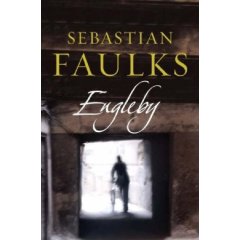
Mike Engleby is a bright student at Cambridge university in the early 1970s. He’s a loner with hangups but he’s not a neurotic Woody Allen; his voice is laced with arrogance and conceit. Engleby is always right in his own eyes – however odd his choices and personal goals are. This unusual although undeniably strong personality is the crux of the novel; we are charmed by the first person narrator, we trust him and join him for the ride. What do we do if he doesn’t always tell the truth? What if he steps over the line? What if he might be a murderer?
What could be a lighthearted look at seventies university life is marred both by the disappearance of a young female student and Engleby’s dwelling on his grim experiences of public school bullying and abuse. As his reminiscences unfold we learn that one of his worst abusers is later subject to a violent assault; Engleby is also questioned about the girl’s disappearance. He freely admits that, whilst some memories haunt him daily, he is often unable to recall others quite as clearly. The novel follows his progress after university and into the eighties, where he has forged something of a career as a journalist. A man with only one real male friendship and apparently only one relationship with a female, he claims to have met and befriended figures from the world of entertainment and politics, including Jeffrey Archer and Ralph Richardson. But again, is he really telling the truth?
Faulks’ strength is a writer is that we find it hard to condemn Engleby. Whether it’s the petty crime he indulges in or the prospect that he might just be involved in a murder; the influence of the narrator, however unreliable or unstrustworthy, has never been stronger in any other novel I’ve read. What’s even cleverer is the brief points of view of others towards the end of the book. A psychiatrist’s report on Engleby’s narrative throws up several questions about his personality and behaviour; points I’d considered yet dismissed. Dismissed because I had to keep reading this compelling voice.
Engleby is a fascinating and intellectually absorbing novel, keeping its final trump card until the very last page. Sebastian Faulks is a very fine writer indeed. This might just be his finest.
Almost Back in Business
Sunday August 26, 2007
in books |
Something called Airport Exclusives turned my holiday reading schedule upside down. This is a scheme where UK hardbacks are sold as exclusive paperback editions only in airports. And only in airport space or when you have gone through security or whatever the correct term is. Anyway, this year I was overcome by temptation and bought Engleby, the latest by Sebastian Faulks, and The End of Mr Y, a strange novel by an author called Scarlett Thomas.
Engleby was excellent and I’m going to come back to it at a later date to do it justice. The End of Mr Y came with blurb by Philip Pullman and Jonathan Coe. If it’s good enough for them it’s good enough for me – although I finished the book somewhat perplexed. Nethertheless, I’m also going to deliver full and honest justice at a later date.
By the way, I also finished The Honorary Consul which was marred slightly by the fact that I couldn’t get Michael Caine and Richard Gere out of my mind from the film version. But at a later date … okay, you get the drift.
Previous Page |
Next Page
