After 23 years I’ve finally finished The Wasp Factory by Iain Banks. The debut novel by Banks was first published in 1984 and I remember reading a glowing review in Punch magazine at the time (our school kindly provided copies of Punch, Melody Maker and several newspapers in the sixth form library).
My copy of The Wasp Factory features part of the original Punch review in its cover blurb:
The Wasp Factory is a first novel not only of tremendous promise, but also of achievement, a minor masterpiece perhaps.
I never normally quote reviews printed on paperback covers and don’t always read them, but The Wasp Factory is unusual in that it features extracts from both good and bad reviews. Reading the novel, I kept returning to the heated debate raging on the inside cover as I couldn’t decide whether I liked or hated the book. Stick with Punch maybe, or side with The Times:
Perhaps it is all a joke, meant to fool literary London into respect for rubbish.
So why has it taken me 23 years? I have a problem with Banks – my Punch review promised so much and when I eventually picked up the book I was disappointed. I abandoned it until now. I’ve also given up on a couple of his other novels and don’t know where to begin with his science fiction. Finally finishing The Wasp Factory, and being swayed both one way and the other by the blurb debate, I had to make my decision. Do I go with The Financial Times:
A Gothic horror story of quite exceptional quality….This is an outstandingly good read.
Or sidle up to the Sunday Telegraph reviewer:
No masterpiece and one of the most disagreeable pieces of reading that has come my way in quite a while, but scoring high for pace, narrative control and sheer nasty inventiveness. Iain Banks must be given credit for a polished debut. Enjoy it I did not.
I have had to grimly conclude that I hated this book. I can’t be kind to it like the Sunday Telegraph scribe; the only passages showing any degree of talent are indeed the so-called nasty passages. There are two horrible sequences in the book where Banks shows some narrative flair, but rather than horror for horror’s sake – like passages in a good Clive Barker novel – they were sick for sick’s sake. I found no literary cleverness in this novel, no good prose or interesting characters. The twist at the end is no twist, there are no interesting surprises.
How I wish I could get back the nightmarish few days I spend reading The Wasp Factory. But maybe that’s the whole point. Let me know what you think and we can put our own blurb together.
The film of Ian McEwan’s Atonement is a masterpiece – a true cinema classic.
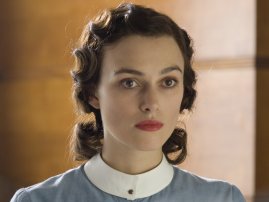
The 2001 novel is a favourite of mine, and Joe Wright (director) and Christopher Hampton (screenplay) lose nothing of the power and potency of the book. In many ways they succeed in improving upon it.
A blistering hot afternoon like yesterday might not be the best time for a trip to the cinema, but I have to take these chances when they come, and besides – like McEwan’s opening chapters the film brilliantly recreates a very similar summer day in 1935. Hot, still days where people think nothing of plunging into cool water; which is essentially what kickstarts the events in Atonement.
A young girl called Briony (Saoirse Ronan) witnesses three incidents that lead her to form conclusions surrounding a fourth. When her cousin is assaulted, she accuses a young man called Robbie Turner (James McAvoy) of the brutal deed. Wright emphasises the strength of fiction in Briony’s word and how her imagination can filter the truth into something else. The sound of typewriters echo through the film’s soundtrack, their sound hammering their importance in this story into us. And is is the typed word that gets Robbie into trouble; when a sexually explicit letter to Briony’s sister Cecilia (Keira Knightley) accidentally falls into Briony’s hands and she later witnesses a sexual encounter between Robbie and Cecilia – in a library, another world of fiction and shaped truths – her imagination goes into overload.
Following Robbie’s arrest the film jumps ahead to the wartime settings of London and Dunkirk. Anyone who has read the book knows to expect that things continue not to be as they seem and Wright really begins to shine here as an artist. The long sweeping shot of troops on the beach at Dunkirk is already becoming something of legend and it really is that good; the scene of Robbie walking through this hell-like vision is breathtaking – visually stunning and also managing to add to some of the intellectual themes of the book. Soldiers play at an abandoned funfair, a broken doll’s house sits abandoned, a ferris wheel turns oblivious to the devastation around it. I want to see this part of the movie again and again to fully appreciate its brilliance.
The film (like the book) will no doubt attract some criticism for its ending, which features Vanessa Redgrave as the now dying Briony, now a celebrated author, in the present day. We’re asked bluntly to think about truth and fiction, what we have just witnessed for two hours, how we would possibly want Briony’s ending to be any different. There is a stunning scene involving the 18 year old Briony (Romola Garai) – now a nurse in wartime London as part of her self-imposed atonement – and a dying French soldier that I think holds the key to the whole story. It’s about misunderstandings and lies, and how sometimes we can do nothing other than give in to them.
What’s best about the whole experience is that a great novel is turned into a fantastic and cinematically clever film. Visually, water plays a part in several key scenes. Cecilia diving into a pond to provide the beginning to Briony’s misunderstandings, Briony jumping into a river to force Robbie to rescue her, a final tragic scene during an air raid in London and the two lovers on an empty beach, embracing as the waves rush around them. This last image one of the most moving I have seen in cinema for some time.
Please see this film – there are excellent performances all round and Joe Wright is a director to watch in the future. It’s unadulterated rich, stunning cinema.
Are you a Goldilocks Kind of Reader?
Thursday September 6, 2007
in books | meme
From Booking Through Thursday:
Do you need the light just right, the background noise just so loud but not too loud, the chair just right, the distractions at a minimum?
Or can you open a book at any time and dip right in, whether it’s for twenty seconds, while waiting for the kettle to boil, or indefinitely, like while waiting interminably at the hospital–as long as the book is open in front of your nose, you’re happy to read?
If I’m engrossed in a book I can just about read it anywhere; queueing to check in at the airport, waiting for my daughter to decide on which pair of shoes to wear, that moment between pouring the hot water over the tea bag and pausing to take it out of the mug. The best book can almost possess you, so that it is with you at every waking moment – if you are not reading it in all of your spare minutes you might as well be because it will be occupying your thoughts anyway.
With a less enchanting book the distractions can give you excuses to not read it. The television in the next room isn’t really that loud, the cat doesn’t really want your attention, the choice of shoe isn’t really that unsuitable but they all combine to somehow release you from a dull book. The weaker read will fail but the best books will always overcome everything that’s buzzing around you.
Previous Page |
Next Page
