
Poolside Reading
Wednesday August 25, 2010 in books read 2010 | travel
It’s easy to succumb to the holiday reading obsession. Choosing the most appropriate books for your summer break and making sure things won’t be tarnished by bad choices. Has a holiday ever been ruined by a bad book? I’m not sure, but I think I probably would have enjoyed the South of France more five years ago without a copy of The Line of Beauty. And I may have brought back better memories of Cyprus without Brick Lane. This year I holidayed in Turkey for the first time since 2004 where I enjoyed Birds Without Wings by Louis Louis de Bernières. Would this year’s choices be as good at that, or would I succumb to another dose of the Hollinghursts?
So perhaps best to get Turkey’s turkeys out of the way. After deciding to give Orhan Pamuk’s Snow another chance I confess to abandoning the book for a second time. I’d fancied an appropriate read for Turkey, but confess that this is a writer I cannot contend with. The Girl With Glass Feet by Ali Shaw looked like an intriguing read but rapidly turned into a tedious and far from involving novel.
As for the two books I picked up second hand before departing, I didn’t touch them at all. Don’t Tell Me the Truth About Love by Dan Rhodes was left in a villa somewhere near Fethiye whilst I donated David Nicholls’ The Understudy to family members. Two of them read it and enjoyed it thoroughly, so it was good to pass on a good read.
Falling into the middle category was The Heart of the Matter by Graham Greene. I enjoy Greene, but somehow this didn’t suit poolside reading at all. This faintly depressing novel didn’t fit the air of frivolity, and Greene’s gloom would be far suited to the current wet climate as I peer through the office window.
There were only two winning books for this summer holiday.
C is Tom McCarthy’s follow up to Remainder, my holiday best for 2008. Remainder was a real literary treat, a book that managed to be refreshingly original, clever and compelling. C is also very good, although I found that McCarthy was moving into the David Mitchell territory of cleverness. It attempts to tackle very big issues; the nature of communication, real and artificial networks, Man’s misalignment with nature until it’s far too late. The book has some excellent passages that make it a must, the best being the chapters set during the First World War that portrays the conflict from the unusual angle of a plane. Highly recommended, although McCarthy appears to have lost the sense of humour that make Remainder so addictive.
My best holiday read is also likely to be my novel of the year and comes from an unusual source. Thomas Pynchon doesn’t usually suggest light summer reading. However his most recent book, Inherent Vice is possibly his most accessible novel to date. Set in California at the end of the 60s this is a mix of detective fiction, brilliant comedy and a wry observation of the era. It centres around a hippy private eye known as “Doc” and his investigation into a missing property magnate, although his movements take increasingly weird and wild twists and turns.
What’s so good about Inherent Vice is that the elements are all strong enough to work independently; remove the trademark Pynchon humour and there is still an intriguing and well executed crime story beneath. And whilst the book is full of crazy yet well observed characterisations (rarely for me I regularly laughed out loud when reading this) it is canny enough to hold California circa 1969 (let us not forget that this was the awful Manson era) at arm’s length. My book of the year. An absolute must.
Books in the family circle that I couldn’t get my hands on included Ordinary Thunderstorms by William Boyd, Fool’s Alphabet by Sebastian Faulks and Fingersmith by Sarah Waters, although my good lady informs me that this was a disappointing read. So I might save them for next year.
Comments [3]
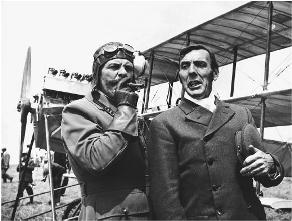 John Fisher’s study of Tony Hancock and Graham McCann’s Spike and Co are excellent companions. The first is a very detailed and well written biography of the comedy genius whilst McCann’s book casts the net wider to contain not only Hancock’s world, but also Spike Milligan, Eric Sykes and Johnny Speight. It follows the activities of Associated London Scripts, set up in the 1950s as a joint venture between Hancock (and later Steptoe and Son) writers Ray Galton and Alan Simpson and Milligan and Sykes.
 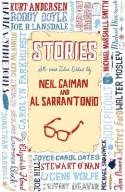 Stories is the much talked about anthology edited by Neil Gaiman and Al Sarrantonio, featuring 28 new tales by a variety of authors. Although not all of the writers featured are known for Gaiman’s home genre of fantasy with a dash of horror, this is the general theme that runs through the book. in some cases it works very well, for example Roddy Doyle’s Blood is very out of character for him but nevertheless outstanding.