Reading But Not Writing
Monday February 25, 2008
in books |
This corner of the blogosphere is becoming increasingly silent. I’m still reading, but there’s never much time for writing at the moment. I finished The Three Evangelists by Fred Vargas, a writer who was annoyingly hovering just outside my radar – for too long for me to continue not reading them. Reading this novel helped me to conclude that I am useless at crime fiction, not giving my full concentration and missing the clues as they are scattered before me. For me, Vargas writes too much like Agatha Christie – I have trouble differentiating between the various characters that just appear too similar. At the end of the book I had just about learnt the names of Vargas’ three evangelists – but I couldn’t tell you any more about them. And I also kept forgetting that Vargas is French, the novel is French-set and a translation. It could have been set in New York, Berlin or Bristol for all the local atmosphere it gave me.
So I’m passing on to Day by A.L.Kennedy, a novel that might just be more my cup of tea…
5/5
My children were at the centre of my life, circled at a distance by my writing. I kept up a steady output of novels and short story collections, largely because I spent most of my time at home. A short story, or a chapter of a novel, would be written in the time between ironing a school tie, serving up the sausage and mash, and watching Blue Peter. I am certain that my fiction is all the better for that. My greatest ally was the pram in the hall.
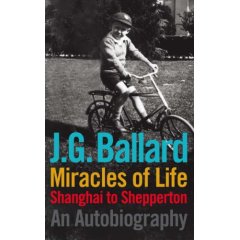
Living with his family in Shepperton, J.G.Ballard published his first novel The Drowned World in 1962. Two years later, his wife tragically died after succumbing to pneumonia on holiday in Spain. The still young writer brought up his three children on his own, filling his days with science fiction between the school run. In his excellent autobiography, Miracles of Life: Shanghai to Shepperton, Ballard remembers raising his children with great pride and affection. This was never a time of struggle of stress, and in his old age looks back to mourn the loss of young children buzzing around him:
But childhood has gone, and in the silence one stares at the empty whisky bottles in the pantry and wonders if any number of drinks will fill the void.
But Ballard doesn’t spend too long mourning what’s gone, and although there are many dark moments in his life, this book is a joy to read. He was born in Shanghai in 1930 and spent the first sixteen years of his life there, several of them in a prison camp when his family were interned by the Japanese during the Second World War. His experiences formed the background for his most commercially successful novel, Empire of the Sun, although anyone familiar with this work should still read Ballard’s new autobiography. It’s a very straightforwardly written yet immensely moving memoir, following his life after the war through medical school, the RAF, family life and success as a writer. He doesn’t dwell on the horrors he witnessed first hand (such as the murder of a Chinese peasant by Japanese soldiers that he stumbles across at a railway station) and he doesn’t try to pry too deeply into the influences that have shaped his writing (surrealism, Freud, the grisly cavadars he encountered as an anatomy student). Miracles of Life reminded me what an unpretentious writer he actually is – and an obviously warm hearted man.
The bulk of Miracles of Life covers the years up to the 1960s; as Ballard grows older time passes very swiftly and the last 20 years are covered in as many pages, although he still manages to include interesting passages on working with Spielberg and his return visit to Shanghai in 1991. There’s also many interesting snippets of his life, such as his volatile friendship with Kingsley Amis and his current literary pals – one of his best friends is Will Self. His oddest associate is probably the young man called Cyril he knew as a fellow internee in Shanghai, who dreamt of changing his name to something more theatrical and becoming a famous actor. Cyril later became Peter Wyngarde, the camp and dashing 60s tv star Jason King.
It might be too early to talk about books of the year, but Miracles of Life is just that – very readable and enjoyable. The final pages, when Ballard reveals the urgency for writing the book, are also very moving. I couldn’t recommend this book enough.
4/5
Picture London in 1967, although I’d like you to put the obvious images out of your mind. I want you to forget about The Beatles tucked away inside Abbey Road and recording Sgt. Pepper. Also forget about Carnaby Street and Emma Peel in The Avengers, and don’t think of Michael Caine and Terence Stamp eascaping their working class roots to live film star lives. Instead imagine the drab end of the period; a city where war is still a very vivid memory, where employment more commonly meant a job for life, where a television set was a luxury rather than a necessity, and where an individual could quite easily go through their life with a suit based upon a 1938 cut. Mr F, the central character of Neil Bartlett’s novel, lives very much in this monochrome, and perhaps more realistic, version of the 1960s. For him, the colourful remain elite; the privileged few who grace the magazine covers that flit before him on his daily commute on the underground. Travelling dutifully to work as a furrier in a warehouse specialising in animal furs in Skin Lane, Mr F is the central character of a very intriguing book.
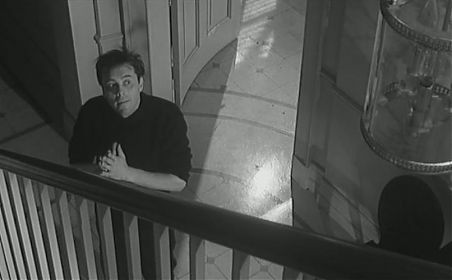
Bartlett manages to successfully weave the different styles of credible journalism, fairy tale narrative and potential murder story into his fiction, although there’s really no need to dissect his style; this novel is just effectively creepy. Wonderfully creepy. One of the reasons for this is that he doesn’t hurry things and the story unfolds very carefully and deliberately; it’s very difficult to tell where this novel is going. The solitary Mr F inhabits our drab sixties world, plagued by his unconsummated homosexuality. When a young man falls under his wing as a new apprentice F begins to fantasise about him, his imagination soon brought into line when the youth blackmails him into paying for his girlfriend’s abortion. We soon realise that Bartlett chose this moment in British history for a reason – 1967 is also famous both for the coldly titled sexual offences act, which decriminalised homosexuality in the UK and for the Abortion Act. But although written from a 2007 viewpoint the narrative avoids being knowingly intrusive. Bartlett ponders over a small archive of faded photographs, papers and forgotten place names to set his scene but doesn’t go overboard in reimagining the past. There’s no sentimentality for the 1960s – and Bartlett is keen to remind us that many of the areas of London he recreates in the novel are now gone. Bulldozed or burnt down, Mr F’s world has since been paved over and rebuilt afresh.
Nicknamed Beauty by his co-workers, the young man represents the fairy tale aspect of Skin Lane, such tales which ravished the imagination of Mr F as a child. And an old and forgotten book of fairy tales makes a final and moving reappearance on the closing page – but Bartlett reminds us that reality is not so clean cut as the fairy tale. Skin Lane tantalises the reader with talk of knives and the precision required to use them with skill, and also the dangers they possess if used carelessly (one of the best parts of the novel is when the preoccupied Mr F slips and badly cuts his hand – you live and feel his discomfort). But don’t be fooled by the quote on the cover of this book – Skin Lane is far from the psycho shocker it’s being advertised as. Bartlett does brilliantly lead the reader into an enclosed space for a chilling final confrontation, although it doesn’t fall into the realm of slasher fiction, and he goes on to soberly add some final chapters to bring the lives of his characters to a natural and realistic conclusion. This is an assured and well structured novel, that isn’t afraid to cast the rose tinted image of the 1960s as the stuff of dreams.
Previous Page |
Next Page
