I hated the picture from the moment I first saw it. Partly, of course, that was because it came from someone unknown, the same someone who had sent me the letter and who wished us harm. But it was more than that. I did not know much about art but I had grown up among delightful pictures which had come down through my family on my mother’s side, charming English pastoral scenes and paintings of families with horses and dogs, still-life oils of flowers and fruit, innocent, happy things which pleased me. This was a dark, sinister painting in my eyes. If I had known the words ‘corrupt’ and ‘decadent’ then I would have used them to describe it. As I looked at the faces of those people, at the eyes behind the masks and the strange smiles, the suggestions of figures in windows, figures in shadows, I shuddered. I felt uneasy, I felt afraid.
Susan Hill’s The Man in the Picture is a brilliant ghost story. The language is deceptively simple; although it reads as a straightforward and traditional spooky tale, full of recognisable motifs from the ghost stories of old, it has already left me wanting to revisit its unsettling pages.
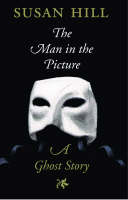
I want to tell you all about The Man in the Picture and yet I don’t. To revel in it may be to spoil it. I don’t want to spoil it for anyone, but I’m itching to talk about it as much as I can. For anyone familiar with The Woman in Black it is similar territory. In this story a horror cascades through time and generations, a horror inherited that will revisit again and again to wield its terrible power. The Man in the Picture reminded me of the chilling power of the stage adaptation of The Woman in Black. The theatre brought out the use of narrative in the story, how one man’s telling of a haunting tale to another is a fantastic device to evoke the raised hairs on the necks of those who listen. Susan Hill’s latest does something similar. Told as a sequence of stories by alternating narrators, the reader is slowly drawn into this disturbing tale.
So I’m only offering teasing glimpses of The Man in the Picture. An atmospheric setting shared between Cambridge and Venice, a mysterious Miss Haversham type, a haunting oil painting and perhaps one of the most effective final lines in a novel. The Man in the Picture allows the reader to guess what is happening next, but only just, only as it is about to happen. By then it is too late to withdraw from the horror. Susan Hill has a real skill in that you can only really say you’ve guessed the outcome with seconds to spare. Read this short novel in one sitting if you can. And prepare to be afraid.
Catching the train to London recently, I suddenly realised I was without a book. This is one of the most sobering of realisations. So when I noticed that Paul Torday’s wine-themed The Irresistible Inheritance of Wilberforce was this week’s special offer with The Times I decided to give it a go.

I know next to nothing about Paul Torday and his novels. I’m aware that he’s written a very successful book called Salmon Fishing in the Yemen. I’m also aware that he didn’t give writing a proper try until he was in his sixties, which intrigues me. It also gives me hope. But I try and stay away from popular fiction because at heart I am a snob, but the three hours on trains without reading material other than work-related documents filled me with dread, so I took the plunge.
Wilberforce is a novel told backwards, which in four sections reverses the life of its narrator. The beginning is very much Wilberforce’s end; stuck in a four bottles of wine a day habit he’s slowly sinking towards oblivion. The opening chapters are excellent; Wilberforce is a comic character, strolling into a restaurant and downing two bottles of vintage wine worth thousands of pounds before being carried out in a stupor. I laughed, but I also asked both how he had reached such a decadent state of alcoholism and how he had become so rich. Torday answers these questions slowly as he strips away the life in question, revealing how Wilberforce has reached this sorry state.
Torday does something rare in a novel, and something I’m always crying out for. This is the third factor. This is where, at about a third of the way through a novel, I am hanging on every word. I’m loving it. I’m cracking open a bottle of wine and celebrating Paul Torday. But unfortunately, even though I found this novel great to start with and exceptional between a third and two thirds, I was disappointed by the final section. Without giving too much away, I realised I’d fallen for the drunken, careless and infuriating Wilberforce, and as Torday slipped back each year I was less enamoured by his earlier incarnations. Wilberforce is a wonderful creation in the tradition of the unreliable narrator, and as he becomes more reliable he’s less addictive. No matter. Torday is a very good writer and is almost as good as Jonathan Coe, who might have made this something really special. But worth a read, even if you have to pay full price for it.
One must be careful about evocations, for the markers of old graves are not always accurate.
It’s October time again so my choice in fiction is already turning towards the dark, haunted and peculiar. What better place to start than H.P. Lovecraft? I’ve always found Lovecraft’s work terrifying because it is so convincing. Even though the stories are usually fantastic, there is so much attention to detail and specifics that he draws you much further into the macabre than any less precise writer would do. He also has the tremendous power of suggest and, like M.R. James, offers many a warning to the curious. As our opening quote hints, necromancy is a dangerous and never exact science.
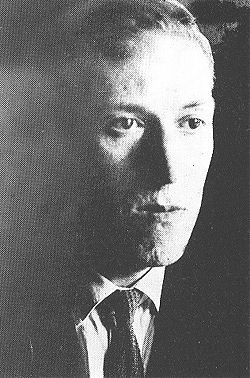
The Case of Charles Dexter Ward is an excellent example of Lovecraft’s art. In this short novel, a young man slips further into apparent madness and perversity after learning that one of his ancestors dabbled rather too successfully in the occult. Even though the tale is effectively chilling, Lovecraft shows the reader very little. The evil and unwholesome deeds usually take place behind closed and locked doors, and the reader only gets glimpses of the true horror from the reactions of innocent bystanders. We rely on half heard disturbing cries and howls and unpleasant and overwhelming odours, always a favourite of Lovecraft. The descent into the depths of Ward is also well marked by his observers, his strange nocturnal habits, brief sightings and the muffled voices and secrecy.
Lovecraft also sets his scene with great skill. The account of Ward’s ancestor, Joseph Curwen, comes across like a work of fact in its studious attention to detail. It’s almost as if there is a legacy of horror built up brick by brick over the years before Ward mistakenly uncovers it. The best passage of the book, however, is when the bystander Dr Willett decides to investigate things:
Slowly, as befitted one of his years, he descended the ladder and reached the slimy steps below. This was ancient masonry, his torch told him; and upon the dripping walls he saw the unwholesome moss of centuries.
I really didn’t think this a sensible outing, and found his later discoveries even more unpleasant, but like poor Dr Willett, I feel like I’m slowly descending into a slimy and dark pit when I read Lovecraft, and sometimes the text is so layered and dense I find myself putting the book aside before realising I have only read a small number of pages.
Lovecraft’s short story The Dunwich Horror is successfully horrifying for many of the same reasons as The Case of Charles Dexter Ward. The backstory and chain of unsettling events, the odours, the sightings and the sounds. Much is relayed as first hand accounts of startled (and surviving) witnesses. There’s also the documented evidence, often present in ancient writings, ciphers and manuscripts:
He had not left the manuscript all night, but sat at his table under the electric light turning page after page with shaking hands as fast as he could decipher the cryptic text …. Toward the middle of the next night he drowsed off in his chair, but soon woke out of a tangle of nightmares almost as hideous as the truth and menaces to man’s existence that he had uncovered.
The Dunwich Horror is exhausting in its perseverance to unsettle you. Like all of Lovecraft’s work, you are only privy to half of the real horror. Just a glimpse, with the true terror just around the corner. But I still welcome the coming of October…
Previous Page |
Next Page
