Last year I was very impressed with Tom Rob Smith’s Soviet thriller Child 44. The novel reached the Booker longlist, much to the horror of many critics who thought a commercial crime thriller far too lowbrow. I found this view somewhat sniffy; Child 44 is generally a well written and intriguing crime novel. My only criticism was in how Smith all too eagerly set things up at the end for a sequel. Now the sequel has come.
And oh dear oh dear. Whilst I defended Child 44 against those who accused Smith of being a Dan Brown in the waiting, I have no defence whatsoever for The Secret Speech. This is a book clumsily written and so preposterous that you’ll want to throw it across the room (or in my case out of the hotel room window). Where Child 44 ended with the whispers of a follow up, Smith must have sat around doing very little until his publishers started banging in his door and demanding it. It stinks of a book written in great haste, and one that is little more that a hastily sketched out screenplay in the guise of a hardback.
I don’t normally write bad reviews, but Smith has annoyed me greatly because I’m convinced that he does have talent, and there are parts of The Secret Speech that show what a better book it might have been (albeit only one character convincingly portrayed: the captain of the prison ship that features was very well written for example, which made me question what went wrong with the rest of the book). Otherwise there are too many big scenes that cry out for the attention of the cinema; the detonation of a church, a storm and a revolt at sea, a chase through the sewers.
The Secret Speech catches up with Leo Demidov from Child 44, now heading a unique homicide division (unique because Stalinist Russia had previously denied the existence of anything like murder in their regime where murder was the privilege of the state). Leo and his wife are also coping with adoption (the two girls they took care of after their parents were murdered in the first book). A series of murders surround both publication of Khrushchev’s “secret speech” denouncing Stalin and the incarceration of a former priest arrested years before by a younger Leo. One of Leo’s daughters is subsequently kidnapped and the ransom involves Leo posing as a prisoner in the Gulags in order to help the priest escape.
I can’t really go on as the plot becomes sillier and sillier. In prison Leo meets a crazy governor who reminds of Kurtz in Heart of Darkness. There’s a tough female villain who heads up a Russian gang of cardboard criminals and a twist that looks like it’s going to save the novel but then fails; it all ends stupidly. So unfortunately, and it pains me to say this, The Secret Speech really does to prove that Tom Rob Smith is a Dan Brown in the waiting. And that might even be an insult to Dan Brown; The Da Vinci Code is a much better book.
David Peace’s Red Riding quartet of novels are very much trapped in the time and place of 70s and 80s Yorkshire. Grey days, both for victims of violent crime and the innocent people drawn into police corruption, lies and brutality. The image of 70s and 80s British policing has recently been a popular subject for television, both with the entertaining yet completely unnaturalistic Life on Mars and Ashes to Ashes, and with the adaptations of three of the Red Riding novels which wallowed in smoky rooms and grim period fashion.
Although native to Yorkshire, Peace has lived in Japan for a number of years and wrote his early quartet of crime novels there. Far removed in a setting from the world of Edddie Dunford, Jack Whitehead et al it is perhaps surprising that he makes the novels so believable, haunting and effective. Therefore it is even more surprising that many of the themes of 1974, 1977, 1980 and 1983 surface in the first of Peace’s Tokyo Trilogy, Tokyo: Year Zero.
Tokyo: Year Zero has one of the most brilliant opening sequences I have read for some time, where a murder victim is discovered on the day of the Japanese surrender of 1945. Although a suspect is found in the locality and executed, there is a doubt that he actually guilty of the crime, here beginning the familiar Peace pattern of justice serving as injustice and the police helpless in the hands of those with power. The following chapters jump a year forward to 1946, with Detective Minami showing the characteristics of the typical Peace narrator. Typically repetitive dialogue driving into you, where dreams and reality merge. One of the most arresting sequences surrounds an autopsy, where in a nightmarish sequence Minami perceives the murder victim as still conscious.
In terms of plot, Tokyo Year Zero is most similar to Peace’s earlier 1980, where a detective investigating a series of murders slowly begins to lose his grip on authority and his perception of the world surrounding him. Where 1980 followed the crimes of the Yorkshire Ripper, this novel is based on another real life murderer Yoshio Kodaira, who was executed in 1949. Like Peter Hunter and the Ripper, Minami attempts to piece together a trail of murders that may or not lead to his suspect. One of the murders, one that Kodaira does not confess to, remains unsolved, and Peace enjoys one of his favourite themes of policing and detection masking other crimes that remain a mystery.
That Tokyo Year Zero is so reminiscent of Peace’s earlier novels shows good and bad in Peace’s writing. Some of the episodes appear too familiar, and perhaps it is not a good thing where the voice of a Tokyo detective in the 1940s at times sounds eerily similar to the voice of Brian Clough in The Damned Utd.. There are also other Peace motifs; the mental asylum, the seedy journalist, the prostitutes, the all powerful kingpin sitting outside of the law. Most obviously recognisable is the weak man as an officer of the law, being led, step by step, into an inevitible doom. Criticisms about familiarity are only minor however; this novel also creates an excellent sense of a very different culture at a crucial time in history.
Tokyo: Occupied City, the second part of the trilogy, is out later this year. It will be interesting to see where Peace takes his writing; if it’s more of the familiar or something more surprising. It will still be atop my summer reading list. This is a writer difficult to leave alone.
I’m about a third of the way through Jonathan Littell’s The Kindly Ones, a novel of nearly 1000 pages in length that is an at times painfully disturbing account of the Second World War from the point of view of an SS officer. The book is strange reading; often almost grimly fascinating, at others turgid, laborious and almost unreadable. I’m going to waver my review until when (and if) I finish it. There’s genius in there somewhere, and the novel has already received many glowing notices. I understand where Littell is coming from and where he is going, I’m just finding it hard to stick with him.
The Kindly Ones continues my run of difficult fiction this year, which started with Roberto Bolano’s 2666. Another extremely long novel, the late Spanish author’s swansong has been described by many as a masterpiece. This is possibly the most inpenetrable novel I’ve ever picked up, the kind of novel where you’re still working out what it is actually about when you’re turning the 800th page. Compared to 2666, The Kindly Ones is a breeze, but I’m glad I’ve read 2666. If the reader is an explorer then this is the Everest of books. Or maybe the Moon.
If this wasn’t enough, I’ve also worked my way through David Peace’s extraordinary Red Riding quartet, which although a definite masterpiece is still the most unsettling series of books I have ever read. I followed with The Damned United, Peace’s account of Brian Clough’s short term as manager of Leeds United in 1974. The writing style is as distinctive as his earlier fiction, although where Red Riding blended multilayered voices with brutal landscapes and dreams with brutal characters, I found The Damned United less effective. Expecting an account of Clough’s struggle with Leeds, the reader is treated to more staccato dialogue, confusing jumps between different narratives and Peace’s poetic style, although it’s often the poetry of the nightmare. I found the Clough story, in Peace’s hands, almost too difficult to bear.
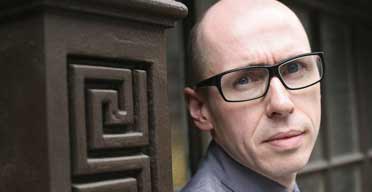
David Peace is like a friend I don’t really like very much but can’t resist. I hang around with him more than I should. I listen to his voice and it gets under my skin; I admire his style but I want rid of it after too long. Then I go back for more.
Next week I’m on holiday but it won’t end there. I’m taking another Peace novel with me, Tokyo Year Zero, the first of his Tokyo trilogy. Also packed is The Secret Speech, Tom Rob Smith’s sequel to the acclaimed Child 44. This is a new crime series of novels set in 50s Soviet Russia. Some may call it dark fiction, but it’s really quite light compared to what I’ve been reading lately.
Previous Page |
Next Page
