Christmas Playlist
Saturday November 24, 2007
in |
I’ve recently been playing around with Last FM and have added a widget to my sidebar. Not quite music while you work, but certainly music while you blog. The other evening I added 15 new songs to my playlist; all with a Christmas theme. But it’s already changing. I’m not sure if I can take another four weeks of Do They Know It’s Christmas? and the irony of including Shakin’ Stevens is going to wear off.
So I think my list will slowly become more alternative. It’s already going that way already. I’ve added Wires by Athlete (it mentions Christmas in the lyrics) and Mad World by Gary Jules, a Christmas Number One from a few years back. Any other suggestions for alternative Christmas songs?
My Weekend With Albert Camus
Wednesday November 21, 2007
in books read 2007 |
Mother died today. Or, maybe, yesterday; I can’t be sure. The telegram from the Home says: Your mother passed away. Funeral tomorrow. Deep sympathy. Which leaves the matter doubtful; it could have been yesterday.
And so begins The Outsider by Albert Camus. Meursault is a young man who is distanced from life; he has a girlfriend, Marie, and a career but remains uncommitted to either. When offered a promotion in Paris he frustrates his boss by failing to react enthusiastically. Similarly, he shows no positive reaction to Marie’s plans to get married and appears to simply drift through his life. It’s far from unpleasant, but he rarely shows that he enjoys it, and his lack of direction or commitment begins to show some worrying signs when he befriends a man called Raymond who rents an adjacent apartment. Raymond is a unsalubrious character who beats women and is pursued by shadowy criminals. He draws Meursault into his confidence who, showing his usual non-committance, is not particularly concerned where this new friendship will lead or the danger it may lead him into. Spending a weekend together with others, Meursault and Raymond run into the latter’s pursuers who attack him. Later, returning to the scene of the crime alone, Meursault shoots and kills one of them.
The Outsider is my first taste of Camus and it reminded me of Kafka, where you sink further into the text without realising it. It’s dense and layered, although at first only seeming the simplest of stories. Throughout the novel, Meursault describes the world around him through physical sensations; the heat on the day of his mother’s funeral; the pleasure from swimming in cool water; food and drink. He is baffled by the night long vigil beside his mother’s coffin; it’s the coffee and cigarettes that keep him awake. When he kills the man it is prompted by the glare of the sun in his eyes – an arguably physical reaction. Imprisoned and facing trial for murder, Meursault continues to show his usual lack of emotion. He describes prison life in great detail, but never complains about it. His only concern is satisfying his physical urges – sexual desire and addiction to tobacco. Marie continues to visit him and the visiting arrangements, with prisoners seperated from their families by huge metal grilles, sounds horrendous – although Meursault makes no complaint once he overcomes the physical barrier of managing to converse over the noise of the other prisoners. He gets used to things, however dismal his life becomes. When the trial commences, the prosecution appear more concerned with his lack of humanity to his late mother. Witnesses are called from her rest home and attendees from her funeral. Meursault’s character is torn apart, his coldness towards and abandonment of his mother more cruel in the eyes of those who judge him. They are less concerned with a cold blooded murder than exposing a cold blooded man.
One of the most memorable characters in the book is Salamano, another tenant in the block of apartments where Meursault resides. Salamano takes his dog out every day, cursing and reprimanding the elderly and sick animal. His foul tempered relationship with the dog becomes a source of amusement for Meursault, until the dog runs away and a heartbroken Salamano seeks consolation in him. It’s the only character in the novel who expresses longing and regret for something that’s happened, either from their own actions or those of others. And although Meursault offers him support, he doesn’t really understand, and when facing execution at the end of the novel he finally pours his energy into an outburst against the prison chaplain – a man who suggests he might like to turn towards God for some mutual support.
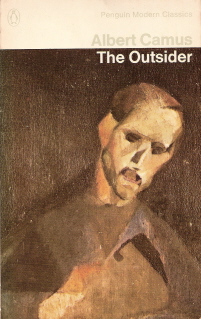
As well as its obvious debt to Kafka, The Outsider reminded me of the type of drama sometimes referred to as the theatre of the absurd; stark, weird but endlessly readable and open to interpretation. The cover above is from the Penguin Modern Classics 1971 edition (the novel was first written in 1942). Jacques Villon’s painting will haunt me as a vision of Meursault; fading, insignificant, condemned.
The walls and door of the kitchen are painted that creamy, brownish white that was so popular at the time. It was as if people were afraid to let any real light and brightness into their lives – or it had never occurred to them that they were allowed to do so.
Jonathan Coe is an author who just gets better and better. From What a Carve Up!, through to The House of Sleep, The Rotter’s Club and The Closed Circle, I’ve found his fiction always inventive and witty. His latest, The Rain Before It Falls, is his strangest piece to date. Experimental, serious, different, it may prove to be the oddity in Coe’s collected work. Or it may be the beginning of a new, more mature, stage in his writing career.
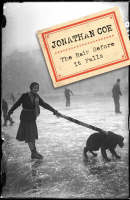
The novel is written from the point of view of Rosamond, whose first person narrative comes in the unusual form of a set of C90 cassettes found after her death. Even more unusual, they comprise of a series of monologues describing a set of twenty photographs to a blind girl. Coe sets himself a tricky challenge, but one that ushers in many opportunities for the ambitious writer. How we rely on photographs to record the truth and how they never really can, the comparison between amateur snapshots of life (the photograph) with art (a portrait painting), the problems with memory and narrative when emotion clouds and gets in the way, the sober realisation that life is never neat and can never be comfortably catalogued and filed away; it’s all here.
The premise of The Rain Before It Falls is a difficult one, and a less skilled writer could easily get bogged down with the conceit, but Coe manages to use it only as a framing device. The real strength of the novel is the story, with the descriptions of the photographs serving to add a touch of originality. Rosamond unfolds the history of her childhood friendship with the unruly Beatrix, and her subsequent encounters with her family which lead to the tragic story of Imogen, the blind girl in question. Rosumond is full of regret, and longing, and ultimately her efforts lead nowhere; it’s a sad and moving tale.
One of Jonathan Coe’s strength as a novelist is his eye for social history and detail. He doesn’t give the impression that he’s researched anything; he just appears to know his stuff. In one chapter Rosamond describes the interior of a 1950s kitchen. The decor, its limitations, the whole rhyme and reason for it comes alive because Coe just appears to be in touch with this distinct moment in history, a very real and English kitchen; ordinary, drab, but very, very real. He’s also reached the Ian McEwan stage where he can tackle complex ideas quite effortlessly; he makes great writing appear easy. I’m going to be watching his next move very closely.
Previous Page |
Next Page
