I hated the picture from the moment I first saw it. Partly, of course, that was because it came from someone unknown, the same someone who had sent me the letter and who wished us harm. But it was more than that. I did not know much about art but I had grown up among delightful pictures which had come down through my family on my mother’s side, charming English pastoral scenes and paintings of families with horses and dogs, still-life oils of flowers and fruit, innocent, happy things which pleased me. This was a dark, sinister painting in my eyes. If I had known the words ‘corrupt’ and ‘decadent’ then I would have used them to describe it. As I looked at the faces of those people, at the eyes behind the masks and the strange smiles, the suggestions of figures in windows, figures in shadows, I shuddered. I felt uneasy, I felt afraid.
Susan Hill’s The Man in the Picture is a brilliant ghost story. The language is deceptively simple; although it reads as a straightforward and traditional spooky tale, full of recognisable motifs from the ghost stories of old, it has already left me wanting to revisit its unsettling pages.
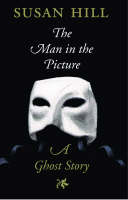
I want to tell you all about The Man in the Picture and yet I don’t. To revel in it may be to spoil it. I don’t want to spoil it for anyone, but I’m itching to talk about it as much as I can. For anyone familiar with The Woman in Black it is similar territory. In this story a horror cascades through time and generations, a horror inherited that will revisit again and again to wield its terrible power. The Man in the Picture reminded me of the chilling power of the stage adaptation of The Woman in Black. The theatre brought out the use of narrative in the story, how one man’s telling of a haunting tale to another is a fantastic device to evoke the raised hairs on the necks of those who listen. Susan Hill’s latest does something similar. Told as a sequence of stories by alternating narrators, the reader is slowly drawn into this disturbing tale.
So I’m only offering teasing glimpses of The Man in the Picture. An atmospheric setting shared between Cambridge and Venice, a mysterious Miss Haversham type, a haunting oil painting and perhaps one of the most effective final lines in a novel. The Man in the Picture allows the reader to guess what is happening next, but only just, only as it is about to happen. By then it is too late to withdraw from the horror. Susan Hill has a real skill in that you can only really say you’ve guessed the outcome with seconds to spare. Read this short novel in one sitting if you can. And prepare to be afraid.
"It's in the Trees ... It's Coming!"
There is a type of film particularly suited to late night viewing. Late night winter viewing, where the viewer might be alone, and where the wind may be rattling at the window. The window is comfortably locked, and the film’s imagined terrors remain harmless, at least until the viewer becomes a little too engrossed. Night of the Demon is one such film.
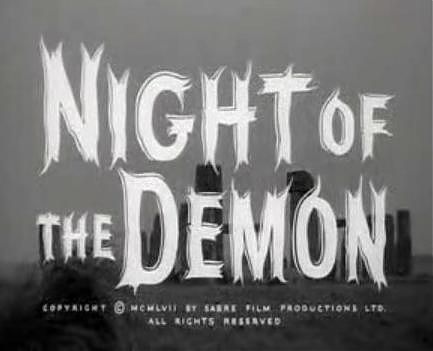
Night of the Demon is a brilliantly scary movie. Some may try to convince you that it’s the scariest movie ever made. It could very well have been, although there are two things that let it down. The first is the casting of Dana Andrews in the lead role, who is awful. Demon is a British movie, and I’m all for American stars cast in the lead with a host of good supporting English actors around them, but why Dana Andrews? He sleepwalks through this film, at times no different from the characters stuck in real hypnotic trances. For a man with a curse on him who has three days to live, he’s a little too relaxed about the situation. Especially as the other people in the film who have been exposed to such curses are raving and screaming (one of them even jumps out of a window).
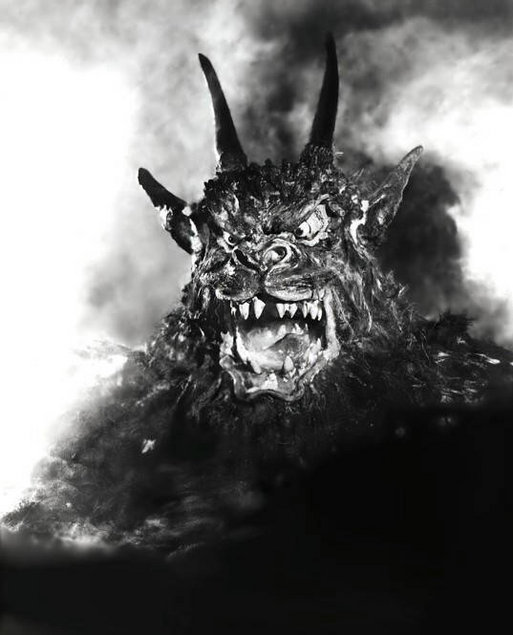
The other problem with Demon is the one that most reviews tend to mention. The demon itself (pictured below) is exposed very early in the film, which does tend to spoil some of the suspense surrounding what exactly the curse is all about. The early demon sighting was also against the wishes of the director Jacques Tourneur, and the film’s producer decided to tag the monster on. But after seeing the film again I decided that the demon sighting isn’t wholly the mistake that it’s reported to be. It’s still scary (I wouldn’t want him around on a dark night, even if the windows are locked) and does whip you up into a state of tension that gets you through the slow opening scenes that follow. It also sticks in the mind, even if you have seen countless films like this.
It is essential to mention that Night of the Demon is based on a short story by M.R. James called Casting the Runes. The film more or less follows the same story, which is about one man’s attempt to debunk the occult beliefs and activities of another. John Holden (Andrews) sets out to expose Julian Karswell (Niall MacGuinness) who is the leader of an apparant demonic cult. Karswell tries to warn Holden off, but he’ll have nothing of it and is eventually beset by a curse. Holden learns that he has been passed a small “parchment”, which he must return to Karswell before the time is up in order to reverse the curse. The film differs from the James story in that it leans on hypnosis as a theme. There’s an excellent scene where a man accused of murder is hypnotised to reveal what really happened to him, and another very creepy episode involving a séance.
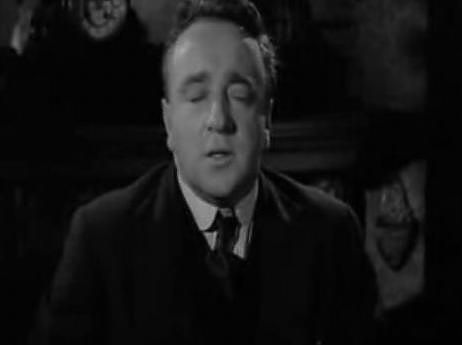
The supporting cast are all excellent and make up for the dullness of Andrews (and the female interest Peggy Cummings, who’s also rubbish). Niall MacGuinness dominates the movie as the villain Karswell. He is simply brilliant, one of the best screen nasties of all time. With his urbane manner and his demonic goatee, he covers his true evil with a veneer of seedy politeness. The film borrows one scene from the James story although it does change it slightly. This is where Karswell is hired to perform magic tricks as a children’s entertainer. Even though he’s performing white magic he’s still darkly menacing. Maurice Denham and Brian Wilde (best known for mild mannered comedy performances in Porridge and Last of the Summer Wine) are also excellent as doomed demon victims. Reginald Beckwith is also good as the medium Mr Meek (pictured), and the cry it’s in the trees … it’s coming! was poached by Kate Bush almost thirty years later to open her song Hounds of Love.
Made in 1957, this is a British horror that predates Hammer films (just) so it’s more of a throwback to the old Universal pictures, and kind of marks the turning point of the genre. If Hammer had got their hands on this instead I would imagine Peter Cushing and Christopher Lee in the two roles, with Lee most likely as Karswell. Night of the Demon is a well crafted film, with the last five minutes or so being some of the tensest in cinema. This is where Holden must return the parchment to Karswell in order to survive. Your hair will stand on end, especially if you don’t lock that window.
Catching the train to London recently, I suddenly realised I was without a book. This is one of the most sobering of realisations. So when I noticed that Paul Torday’s wine-themed The Irresistible Inheritance of Wilberforce was this week’s special offer with The Times I decided to give it a go.

I know next to nothing about Paul Torday and his novels. I’m aware that he’s written a very successful book called Salmon Fishing in the Yemen. I’m also aware that he didn’t give writing a proper try until he was in his sixties, which intrigues me. It also gives me hope. But I try and stay away from popular fiction because at heart I am a snob, but the three hours on trains without reading material other than work-related documents filled me with dread, so I took the plunge.
Wilberforce is a novel told backwards, which in four sections reverses the life of its narrator. The beginning is very much Wilberforce’s end; stuck in a four bottles of wine a day habit he’s slowly sinking towards oblivion. The opening chapters are excellent; Wilberforce is a comic character, strolling into a restaurant and downing two bottles of vintage wine worth thousands of pounds before being carried out in a stupor. I laughed, but I also asked both how he had reached such a decadent state of alcoholism and how he had become so rich. Torday answers these questions slowly as he strips away the life in question, revealing how Wilberforce has reached this sorry state.
Torday does something rare in a novel, and something I’m always crying out for. This is the third factor. This is where, at about a third of the way through a novel, I am hanging on every word. I’m loving it. I’m cracking open a bottle of wine and celebrating Paul Torday. But unfortunately, even though I found this novel great to start with and exceptional between a third and two thirds, I was disappointed by the final section. Without giving too much away, I realised I’d fallen for the drunken, careless and infuriating Wilberforce, and as Torday slipped back each year I was less enamoured by his earlier incarnations. Wilberforce is a wonderful creation in the tradition of the unreliable narrator, and as he becomes more reliable he’s less addictive. No matter. Torday is a very good writer and is almost as good as Jonathan Coe, who might have made this something really special. But worth a read, even if you have to pay full price for it.
Previous Page |
Next Page
