I didn’t really know what I wanted to be, apart from ending up as an eccentric millionaire. I had to be a millionaire. If I couldn’t do it without being crooked, then I’d have to be crooked. I was quite prepared to do that.
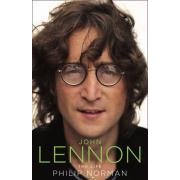
Although I have an unquenchable thirst for anything John Lennon or Beatle related, these pages have been strangely silent over the last two or so years when it comes to the Fab Four. Patiently I’ve waited for a decent new biography to get my teeth into, and now we have Philip Norman’s 822 page John Lennon: The Life. To do Norman’s mammoth work some justice I’m going to spread my thoughts over more than one post. Besides, I haven’t finished it yet. Also I’m away next week and the heavy hardback will take up most of my hand luggage. I’ll have to wait until November to finish it.
There’s been times when I’ve wondered if I’d ever need to read another Lennon biography. I’ve probably read more than my fair share. Strangely, Norman’s other Beatle-themed book Shout, doesn’t stick in the mind much. Ray Coleman’s two biographies of the 80s are much more memorable, and reading them at an impressionable age I held Lennon in the same awe as Coleman. Albert Goldman’s The Lives of John Lennon is also unforgettable as it paints such an awful, and often unqualified, picture of him. The Hunter Davies Beatle biography from the late sixties is fun, as is Michael Braun’s Love Me Do, fascinating for being one of the first books published about the moptops. But I suppose my all time favourite is Ian Macdonald’s techy but brilliant Revolution in the Head.
So the question remained, did I need another Lennon book? And reading the opening chapters of John Lennon: A Life I began to worry that maybe I didn’t. A lot of the detail of Lennon’s early life was very familiar, especially his schoolboy exploits with his partner in crime Pete Shotton, and could easily have been cribbed together from the selection of titles I’ve already mentioned. However, Norman kept me reading because I suspected he was looking at this life with the canny eye of the historian. He weighs up the facts carefully and does not commit to making sweeping statements, for example not subscribing to the general view that John’s father was a scoundrel, abandoning the boy and his mother and only returning when he smelt money. Norman draws the picture of a much more complicated story, and for the first time reveals John’s father as not being such a black and white villain, but an unlucky man often prone to unfortunate circumstances.
Norman also handles the well worn legends very carefully, trying to avoid the apochryphal tales. The tragic death of John’s mother when she is run over by an off duty policeman is treated without the sensation of some other biographies, as is the other tragic death in John’s early life. The sudden demise of “fifth Beatle” Stu Sutcliffe aged 22 is related without the usual romanticism, which results in making this loss very moving. And Norman is also careful about the Goldman-fuelled rumour that John was indirectly responsible for his friend’s death by attacking him in a drunken brawl. He doesn’t jump to conclusions about what might or might not have happened because we will never know.
The other turning points in the story arc of the early Beatles are treated with similar care. Norman doesn’t give too much time to the sacking of Pete Best, and, like him, I quietly conclude that it was the right decision to get rid of him. Me, I’m a Ringo man. The supposed gay affair between John and Brian Epstein is also played down; there simply isn’t enough evidence to prove what happened one way or the other. What Norman does do, however, is expose the cruel and dark side of Lennon’s nature that is reliably documented; his violent assualt on a DJ friend that was covered up to avoid a Beatle-ruining scandal, the appalling treatment of Cynthia Lennon, the “secret wife”, and Lennon’s countless affairs.
But he was a mixed up fucker and this made him a great artist. John Lennon: The Life reminded me of one of my favourite books about the 1960s, Dominic Sandbrook’s White Heat. This gives a similarly intelligent, well researched and careful account of legendary, fantastic and life changing events. And you can’t really avoid reading the Beatles and John Lennon story just one more time once you start doing so, especially when it’s put together so well.
Of course I’m only so far; the Fabs have only just released their second album With the Beatles. And listening it again today I’m reminded of its charm, sense of excitement and timeless longevity. So turning the pages still only in 1963 I’ve a long way to go yet. I hope you’ll join me for the rest.
Fairground settings can be deliciously creepy. Whether you find them in fiction (one of the best examples of using the fairground for macabre purpose is Rad Bradbury) or in cinema (try 1967’s Torture Garden from the horror studio Amicus). Even the most cursory of searches will result in other films using fairgrounds, the circus or bizarre museums for their settings. House of Wax (1953) with Vincent Price, Circus of Horrors (1960) or perhaps Circus of Fear (1966). However, there are no truly memorable films using the abandoned carnival as a setting, a place where you really really wouldn’t want to go. Especially alone on a dark night. At least I thought that. This was until I saw Carnival of Souls.
As cult films go, Carnival of Souls is very hard to find, so I was surprised when I discovered that I owned a copy on DVD. Made in 1962 by Herk Harvey, it is an early addition to the American low budget horror genre, a more successful film in the same ilk being Night of the Living Dead. However it’s possibly incorrect to label it as a horror film at all; this is just an incredibly creepy film. It’s scary yet there’s little horror in it. It’s memorable because it is so odd.
The film has a basic premise. The unusually named Candice Hilligoss (Mary Henry) survives what looks like a pretty fatal car crash. Although visibly unscathed, there’s something a little strange about her. The frightened and distant look in her eye, perhaps, the magnetic pull an abandoned funfair appears to be having on her… it’s inevitible what’s going to happen in Carnival of Souls but that’s the fun of the ride. The jumps come in the predicted places, although you may find yourself jumping a little more than you expected.
Candice works as a church organist, allowing Harvey to use the organ for one of the most effective soundtracks you’ll hear. The music isn’t particularly pleasant, but it’s highly original, and the director gets the best effect when the music actually stops. The eerie silences in this film cleverly raise the tension, and it is a very tense film indeed. Candice takes a room in a boarding house and it pursued by a fellow lodger called John. He’s a bit of a creep, descending upon her in the morning with half empty bottles of whiskey, but continues with his painstaking advances even though this woman can only offer a vacant stare or two. (At one point he exclaims That’s just what I need! Get mixed up with some girl who’s off her rocker!)
The scenes with John provide some comic relief for what is essentially, as he predicts, scenes of Candice going off her rocker. Spectacularly. She begins to see the same pale faced man wherever she goes, driving in her car, in her room and memorably in one scene in a Doctor’s consultancy. The first appearances are very fleeting, and the image above is the last of several attempts I made to catch an appropriate still of the film.
Eventually Candice is drawn to the abandoned carnival, where the film wraps up effectively. There’s a final twist that, although not particularly surprising, is still suitably shocking. And the creepy faces blend so well with the organ music that it gives further weight to the argument that low budget films are often the best.
By way of a taster, here’s the original trailer:
As the good man says, you can’t afford to miss it…
Neil Gaiman is my favourite writer of short stories. His novels are great too, but there’s just something spellbinding about his shorter pieces. The collection Fragile Things was possibly the best book I read last year and certainly one of the best and most memorable books of ghost stories I’ve ever read. The Graveyard Book is his latest work of fiction, and although aimed at a younger readership it still bears Gaiman’s refreshing flair as a gifted writer of supernatural tales.
The Graveyard Book is about a lost child raised by ghosts in an old graveyard, now fallen into overgrown disuse. It’s a simple idea, and its possibly been used before, but only a writer of Gaiman’s class can use it so well. He lets his imagination run with the concept, both through the eyes of the child in question, Nobody Owens (Bod), and through inviting his reader to become immersed in the story. The setting he creates is wonderful, the collapsed and crumbling headstones, the old crypt, the unconsecrated ground, and the ghosts themselves who range from the comic to the creepy. Most of all Gaiman has a wonderful way with words: at one point Bod pauses in conversation to run his fingers over a moss-covered grave, so simply and in so few words reminding the reader they are in the midst of an incredible ghost story.
I’ve mentioned my love for Gaiman’s short stories, and the best parts of The Graveyard Book read like self-contained tales in their own right. Typically for Gaiman, he reveals some of the craft that went into this book in the closing acknowledgments, explaining that he started with the fourth chapter and then later constructed the rest of the book around it. This, The Witch’s Headstone, is a brilliant passage, where Bod encounters and befriends the ghost of a medieval witch. Similarly, another chapter stands out in its own right where Bod plays with a young girl who perceives him as an imaginary friend, only to be found amongst the graves, a friend who’ll fade with memory. Like Gaiman’s best work, it is very touching.
I loved this book throughout, although at times it does feel that Gaiman has strained to wrap a plot around his wonderful prose. I can understand this, as a book aimed at younger readers must appear to be going somewhere, and I may be cynical when I draw comparisons with Harry Potter. But they are there. The child in danger after his parents are murdered, the protection of magic and secrecy, the Dumbledore role as personified by Bod’s guardian Silas. Like Harry, Bod is perceived as a misfit in the “real world”, and like Rowling, Gaiman has a clever line in humour when he portrays those in the magical world who choose to teach and steer our hero.
However, Gaiman has an advantage over J.K. Rowling in that his other fiction is far more varied. Whilst she is yet to branch out from Hogwarts, Gaiman can point his newer readers in the direction of his darker fiction. Passages in The Graveyard Book, in particular Bod’s encounter with the deadly ghouls, recalls the dark and crazy humour of Anansi Boys and American Gods. Most of the readers of The Graveyard Book aren’t quite ready for this very adult stuff, but Gaiman can do that rather wonderful thing in children’s fiction – suggest that there are very broad, challenging and exciting horizons for the reader yet to come.