Grindhouse is the latest collaboration between Quentin Tarantino and Robert Rodriguez (an enduring partnership that includes From Dusk Till Dawn and Sin City). Planet Terror is an all out tongue in cheek zombie film, directed by Rodriguez, that’s shown back to back with Tarantino’s Death Proof. And there’s more – fake trailers and advertisements to give an early 1970s exploitation feel to it all. It’s over three hours long and, although enjoyable, this is really one for the fans. USA Today reported that the opening weekend for Grindhouse was disappointing, but there’s no way that this will ever find a mainstream audience. Since Pulp Fiction, Tarantino is happy to go down his own little alleyway into the weird and obscure and to take his pal Rodriguez with him.
Planet Terror sets itself some tricky challenges – to be both a decent zombie film and to be an amusing parody. Zombie films are as ubiquitous as the walking dead that populate them, and there are a good few very good ones from the last 40 or so years if that’s your type of movie. There’s even been an enjoyable spoof with its own scary moments ( Shaun of the Dead ). Rodriguez does reasonably well, Planet Terror is certainly sickening enough, both with the amount of blood spilt and the gruesome humour, but this film outstays its welcome by a good forty minutes. It’s not that I didn’t get the joke. I did – I just stopped laughing quite early on. But if machine gun wielding one legged table dancers appeal to you, don’t let me stand in your way.
Death Proof is less of a parody of a particular genre and more of the type of film typical of Quentin Tarantino. There’s the smart and intricate dialogue, a wealth of interesting female characters, the clever soundtrack and the sense of unease; on first viewing you have no idea whatsoever of where things might be heading. There’s also Tarantino’s clever use of an established actor who you may not have rated too much in the past. Think of John Travolta and Bruce Willis – both excellent in Pulp Fiction – or Michael Keaton in Jackie Brown. In Death Proof it’s the turn of Kurt Russell, who is excellent as a very deranged stunt man, and causes one of the best car chases I’ve seen in cinema for a very long time. A review in the New Yorker mentions it in the same breath as Spielberg’s Duel.
Ultimately however, the people chuckling the most at Grindhouse are Tarantino and Rodriguez themselves. I didn’t really find the spoof film trailers that amusing, and the reason for this was that the real film trailers preceding the main feature were more absurd. How can you possibly be more ridiculous than:
- A film starring Nicolas Cage with another one of his insane hairstyles where he plays a man who can visit and/or forsee the future
- A hilarious comedy about two men who pretend to be gay in order to fool their employers
- A remake of Halloween
- A new Die hard instalment
- A film about a haunted hotel room starring John Cusack and Samuel L. Jackson
Hollywood films these days are spoof-proof.
The other jokes they throw our way also wear a bit thin; the deliberately grainy film quality, the spools that appear to jump and the ‘missing’ reels, segments of the films that just aren’t there. Rodriguez and Tarantino also lazily forget from time to time that we’re supposed to be in the 1970s, giving their characters convenient mobile phones and internet access. Or maybe that’s a joke I missed?
But I did enjoy Death Proof. I’ll need to see it again, but it could be one of Tarantino’s best. He’s not breaking new ground, but he’s not attempting to. He’s just having a great time being Quentin Tarantino. I still left the cinema with that post-Tarantino guilty feeling though; should I really have enjoyed all that easy carnage so much?
Off Line
Friday March 30, 2007
in |
I’m taking a break from Reading and Writing for a couple of weeks to recharge my batteries and do some travelling in the States.
I travel light. iPod, Simpsons Top Trumps and of course one or two books. I’m a few pages in to The Testament of Gideon Mack by James Robertson and it’s already shaping up to being something special. Holiday reading is going to be good.
PS I won’t rule out the possibility of some US based posting…
In a year or two, the older generation that still dreamed of Empire must surely give way to politicians like Gaitskell, Wilson, Crosland – new men with a vision of a modern country where there was equality and things actually got done. If America could have an exuberant and handsome President Kennedy, then Britain could have something similar – at least in spirit, for there was no one quite so glamourous in the Labour Party. The blimps, still fighting the last war, still nostalgic for its discipline and privations – their time was up.
On Chesil Beach examines one evening in the life of a young couple called Edward and Florence, the most important in their lives as they prepare for their wedding night in a Dorset hotel. It’s 1962, and Ian McEwan is knowingly aware of the worldwide cultural changes that are beginning to take place. The novel portrays Edward and Florence as products of a stifling era that will thankfully soon be over – both are sexually inexperienced, the former frustratingly so – and they both face their wedding night with terror. And this is the rub. Such importance has been placed on this experience – this event – this night – that the odds are very high on things going wrong.
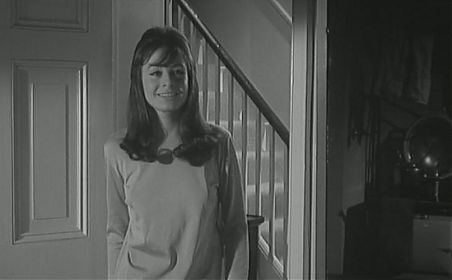
There is a sense that McEwan hates this point in history, that he can’t wait for the 1960s to get into swing and for the English to grow their hair and let it down. Even though On Chesil Beach can’t help appearing to view the respective childhoods and adolescence of Edward and Florence as taking part in charmingly innocent times, I still (as a cynic) read a lot of sadness into McEwan’s account of their formative years. Edward’s mentally unbalanced mother, his strange flirtation with physical violence, Florence’s desperately competitive father; it’s all brilliantly subtle writing – the sort of thing that makes McEwan the master he is.
Ian McEwan has a knack for slowing down time, examining events that happen very quickly by reducing them in his narrative to a snail’s pace. The ballooning accident in Enduring Love and a road rage incident in Saturday are two such examples, where he thoroughly examines what is only really a fleeting moment in time. In On Chesil Beach it’s this fateful night, no more than a hour in real time, that is examined so thoroughly and becomes so unforgettable, haunting and poignant.
There’s a point where our most vivid memories become ingrained on our consciences forever. For Edward and Florence it’s this very evening that they spend together on and near to Chesil Beach; still vivid, disturbing and nightmarish to them for the next 45 years. This is the substance of the novel and of their memories. The concluding “catch up” part of the novel – 1962 to the present day – comprises only a few pages; without giving anything away the lives of Edward and Florence are brought promptly up to date. Events since 1962 are insignificant and fleeting – for the reader and for them. For significance as one of life’s major turning points, it really does all happen on Chesil Beach.
On Chesil Beach may appear insubstantial in its brevity but I really believe that McEwan is at the height of his powers, mastering the ability to leave a lot unsaid, and leave a lot to the consideration of the reader. I’ve been rereading one of his earlier novels, The Child in Time, and it’s noticeable how much he has matured, becoming much less laboured as a writer. His prose is graceful, flowing and absorbing. Britain’s greatest living author? He’s getting there.
Previous Page |
Next Page
