3 Stars
Since closing the last page of Cold Mountain I’ve been considering quietly forgetting this book, leaving a small gap and then swiftly moving onto the next. Charles Frazier’s novel was highly recommended to me, both by fellow bloggers and by friends. The problem I had wasn’t obvious at first, but then it was clear, vivid and eventually spoilt my enjoyment of the book.
My problem was Cormac McCarthy. Just when I decide to leave the author alone for a while I pick up another writer who is so clearly influenced by him that it hurts. What stopped me from enjoying Cold Mountain was the realisation that – take McCarthy out of the equation – and you have no book. In fact never before have I found one writer to be so heavily influenced by another. Frazier copies McCarthy’s unique writing style to the letter, the landscape, the detailed descriptions of chance encounters, characters careful preparations of food (where every meal could be their last), despicable individuals you can’t help liking (Veasey) – and the senseless deaths. And the style of dialogue – the ironic humour – the characters asking themselves what they aim to do – is all McCarthy.
Sorry to be like this. There is a great novel in there somewhere, but reading Cold Mountain was like listening to an Oasis album. Okay, but it’s been done before – and better. Cold Mountain is the best novel Cormac McCarthy never wrote – and I can guarantee someone’s already said that before.
4 Stars
I do not know what you are expected to do with memories like these. It feels wrong to want to forget. Perhaps this is why we write these things down, so we can move on.
Mister Pip by Lloyd Jones is about the effect that Great Expectations has on a particular individual. Appreciation of Dickens’ novel is preferred but not essential to read Mister Pip – it is about how a book can shape our lives in how we make sense of our own place in the world when we compare it to fiction, and about how others may choose to interpret a book for us and how we might come to find the faults in a story. Any story – told well or badly. It might not be Dickens for everyone, but I think we all have books that has made such a mark on us. Or even stories told to us by the forgotten.
On the South Pacific island of Bougainville in 1991, a vague yet threatening war casts a worrying shadow. Mr Watts, also known as Pop Eye, assumes the role of school teacher in an attempt to keep normality flowing. He has only only one text book to hand – Great Expectations. He invites the locals to provide improvised lessons to fill the gaps; the rest of the time he reads Dickens to his class. Mister Pip is in turn narrated by Matilda, who becomes fascinated by the world of Pip, Magwitch, Estella, Miss Havisham … and Mr Watts. As she grows older she turns from Dickens student to scholar, and along the way the narrative also turns – from well observed humour to darker meditation on human cruelty.
What I liked most about Mister Pip was the subtle charting of Matilda’s maturity. It’s not education that saves her – Mr Watts can’t provide education in the conventional sense – but the wisdom she gains as an observer. Fiction from a child’s point of view doesn’t always work, but Jones manages to pull it off. So much so that I didn’t question this voice of a young girl, ready to consume the world but instead facing terrible tragedy.
For a slim work, Mister Pip has great depth. The mystery of Pop Eye’s history is slowly unravelled for Matilda, and through his eccentricity and sadness she does, oddly, learn a lot. This made me think about my own teachers and how, quite frankly, useless they were in the great scheme of my life. Sometimes the oddest characters we encounter can teach us the most. Whether the classic, like Joe Gargary or Philip Pirrip in Great Expectations, or the forgotten, like Mr Watts.
A book to be treasured.
4 Stars
Written in 1954, Richard Matheson’s I Am Legend was first filmed as The Omega Man in 1971. It starred Charlton Heston, a reasonable choice for the lead coming only a few years after his success in the post apocalyptic Planet of the Apes. In the early 1990s a new version was touted starring Arnold Schwarzenegger. Again, not surprising when you looked at his CV, although this film was, perhaps thankfullly, never made. I Am Legend has eventually returned to the cinema starring Will Smith. Not my first choice (Nicolas Cage springs to mind for such a role, even Daniel Craig), although I’ll refrain from commenting further until I’ve seen the film.
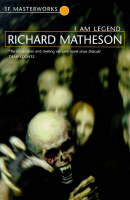
In the great family tree of horror and sci-fi, it’s not difficult to trace countless books and films back to I Am Legend. Matheson’s future not only concerns an empty city after a deadly plague has killed off most of the population, but also features some of the (un)lucky survivors now doing their night to night business as vampires. Translate vampire into zombie and you have the blueprint for Night of the Living Dead, Dawn of the Dead, 28 Days Later and many others. But a blueprint doesn’t necessarily make a good novel, so is I Am Legend any good? Well I wouldn’t go as far as to say it was great literature but it is a very, very good book indeed…
Robert Neville lives alone in his customised home; he can generate his own electricity to keep his stock of frozen food fresh. He spends his hours making tools, especially wooden stakes. Time is something he has a lot of because, more or less, he’s the last man on Earth. Occasionally Robert Neville drinks. He drinks a lot, but we can forgive him for that as every night a troop of vampires call on him. He locks himself in his house, often fighting them off. During the day, when his enemies sleep, he seeks them out to destroy them and seeks further for a cure to the madness.
What lifts I Am Legend above the usual horror tale is the Robinson Crusoe slant Matheson manages to put on it. Neville slowly comes to terms with his isolation, becoming increasingly resourceful in his survival. His loneliness begins to tip him into an indifference towards his previous role in society and humanity, and as well as Crusoe this novel also acknowledges Gulliver’s Travels as a reference point. When Neville eventually does encounter another seemingly real human, his reaction is far from ecstatic.
Matheson is careful not to slip into too much explanatory prose. I really didn’t want to know what had caused the catastrophe leaving Neville as the last man on Earth, and I became uncomfortable when he begins to delve into some reasoning behind the vampires presence. But he doesn’t become too bogged down. The silly science is kept under leash, leaving some quite moving passages in the book to stand out. Especially good is the part when Neville attempts to coax a stray dog into his world, a sad episode that leads neatly into his encounter with a real – perhaps – human visitor.
I’m tempted to see the latest cinema treatment now – although it will have to be pretty good to surpass this clever and timeless novel.
2 Stars
Sebastian Faulks is probably best known for the celebrated Birdsong, and last year published possibly his best novel so far – Engleby. The Girl at the Lion d’Or dates from 1989, and focuses on a young maid in France during the mid 1930s. Although many novels set during this period concentrate on the looming Nazi threat and impending war, Faulks’s is more concerned with the spectre of The Great War, with its main characters wrestling with the uncomfortable memories it has left them.

Anne is the mysterious maid at the centre of the novel, who arrives to work at the Lion d’Or hotel under the auspices of the stern and formidable manageress. She meets and falls in love with a prominent Jewish man called Hartmann, although ultimately their affair begins to prove far from idyllic. Beneath the problems that stall their relationship (Hartmann is married) they are both haunted by the First World War, Hartmann as a veteran and Anne by the tragedy in her family caused when her father was shot as a mutineer. Faulks manages to recreate this period brilliantly, the Lion d’Or and its surrounding neighbourhood appear as very convinicing and real. The novel also includes many well drawn supporting characters spanning the social spectrum of the setting; the secretive Patron in charge of the hotel, the young waiter who spies on Anne as she bathes, Hartmann’s middle class and carefree country friends, even a government minister ruined by scandal.
The Girl at the Lion d’Or is very well written but it is a slight piece. Faulks attempts to write a conventional and straightforward novel, and its critics may be tempted to dismiss it as a weak slice of romance – its champions, however, have praised it for its subtlety and style. I was undecided. The Girl at the Lion d’Or is a stylish and intelligent work of fiction but it’s also inconsequential and at times slightly dull. Recreating a moment in history isn’t always enough, and subtle writing doesn’t always equate to masterful writing. And coming to it with Birdsong in my mind, I was quite disappointed.
Next up from Sebastian Faulks is Devil May Care, his contribution to the James Bond canon. I’ll be reading this novel when it comes out as I think, two decades on from The Girl at the Lion d’Or, he really does know how to write well – especially after Engleby, which really is masterful. And he may even be able to pick up spy fiction, dust it down and make it fresh again.
5 Stars
After finishing J.M.Coetzee’s Disgrace I was reminded of Philip Roth’s Everyman, a novel I had high regard for although one I forgot to include in my recent summary of favourites from 2007. Like Roth’s novel, Disgrace follows an ageing and at first not particularly likeable man as he quenches his sexual thirst, in this case with consequences that totally alter the course of his life. David Lurie is a university professor in Cape Town who, after becoming involved with one of his students, is forced to choose no option but to resign from his post and slips away quietly to lick his wounds on his daughter’s farm. Whilst living there, life takes another dramatic turn when they are both violently attacked in their home, Lurie set fire to and his daughter raped. The novel continues as they attempt to recover from this assault, and its consequences on them, their relationship and their place in the world.

I’ve compared Disgrace to Everyman because the two novels had a similar effect on me. A central character facing up to his middle age and beyond, and a realisation that they will never again be able to charm a young and attractive girl. Coetzee’s Lurie settles for an affair with the plain and unattractive woman he assists at a veterinary hospital, his arrogance accepting this as an ironic fall from grace. But, like Roth’s Everyman, we warm to him because, although already of a certain age, Lurie learns an incredible amount from the events in Disgrace. He doesn’t cast off all of his faults, but I found the book captivating because of this. When, towards the end of the novel, he violently confronts a man he believes to be one of the attackers I found myself supporting his anger. An emotional response, but one a reader can understand which makes Coetzee’s characters live and breathe just that little more distinctly.
Disgrace is written with great clarity and precision. It’s a brief work (as is Everyman) but is rich, multlayered and very profound. Lurie, although specialising as an academic in poetry, is very unpoetic. In my opinion his pursuit of the young student is ungraceful and ill-conceived. It is inevitibly his closer move towards nature, and in particular his relationship with the doomed dogs he deals with at the animal hospital, that brings him to life. And gives this novel its particularly moving ending. My first taste of Coetzee and very impressive, especially in how he manages to make such a brief novel an extremely thought provoking work.
Previous Page |
Next Page
